Graphite
Curation as a form of drawing research gathers quietly, taking shape through the cross-conversation of artists, works, writing and thought. Testing the bounds of drawing, this practice proceeds iteratively, allowing meaning and knowledge to form gradually over time — still provisional, still forming.
Graphite / GROUP SHOW
Ode to a Slippery Shape-Shifter
Graphite can be a tricky medium because its slippery surface makes it difficult for other media to adhere to. Despite this complication, graphite has an undeniable charm. In powdered form it has a soft, luxurious quality and is perfectly suited to creating atmospheric tones that appear to float just off the drawing surface. As a liquid, graphite flows in diluted tones across paper and fabric, whether painted, dripped, poured or wicked. In solid stick or pencil form, it can be hard and precise, maintaining sharp edges where other media, like charcoal or pastel, would smudge and crumble. Graphite's shale-like structure also allows it to catch and reflect light, appearing stunningly bright under oblique or raking light. One of its most intriguing characteristics however, is that graphite never sets or hardens; it remains unstable, ever-changing, and in flux. As an art form, drawing is often characterised by its mutability, a characteristic derived from drawing media like graphite, which remains changeable.
Graphite is ubiquitous in the form of lead pencils (despite the misnomer, as they are not made of lead). Pencils are democratic and accessible, easy to use and readily at hand. In this form, graphite serves as the medium through which thoughts are often expressed – a quick sketch, a shopping list, a hastily drawn map, meticulous notations or schematic diagrams. Fast communication, so central to graphite's uses, underpins its nomenclature as the Greek word 'graphein' from which graphite is derived, means 'to write'. Graphite is the perfect tool for thinking on the page and externalising thought. The circular, haptic thinking that occurs between eye-mind-hand and plays out through cycles of doing and undoing, thinking and rethinking, is ably facilitated by graphite's ready accessibility and the ease with which it is erased. Graphite is a versatile and beautiful material, and its shape-shifting character enables it to do different things for different people.
DRAW Space gallery is the ideal platform for showcasing graphite, a medium fundamental to contemporary drawing practice and an ancient material that continues to drive new and innovative thinking and processes. As the curator of GRAPHITE, I found the artists and their work recommended themselves almost simultaneously to the idea for the exhibition being hatched. Such is the diversity of uses and the extraordinary graphite based work produced in contemporary Australian drawing.
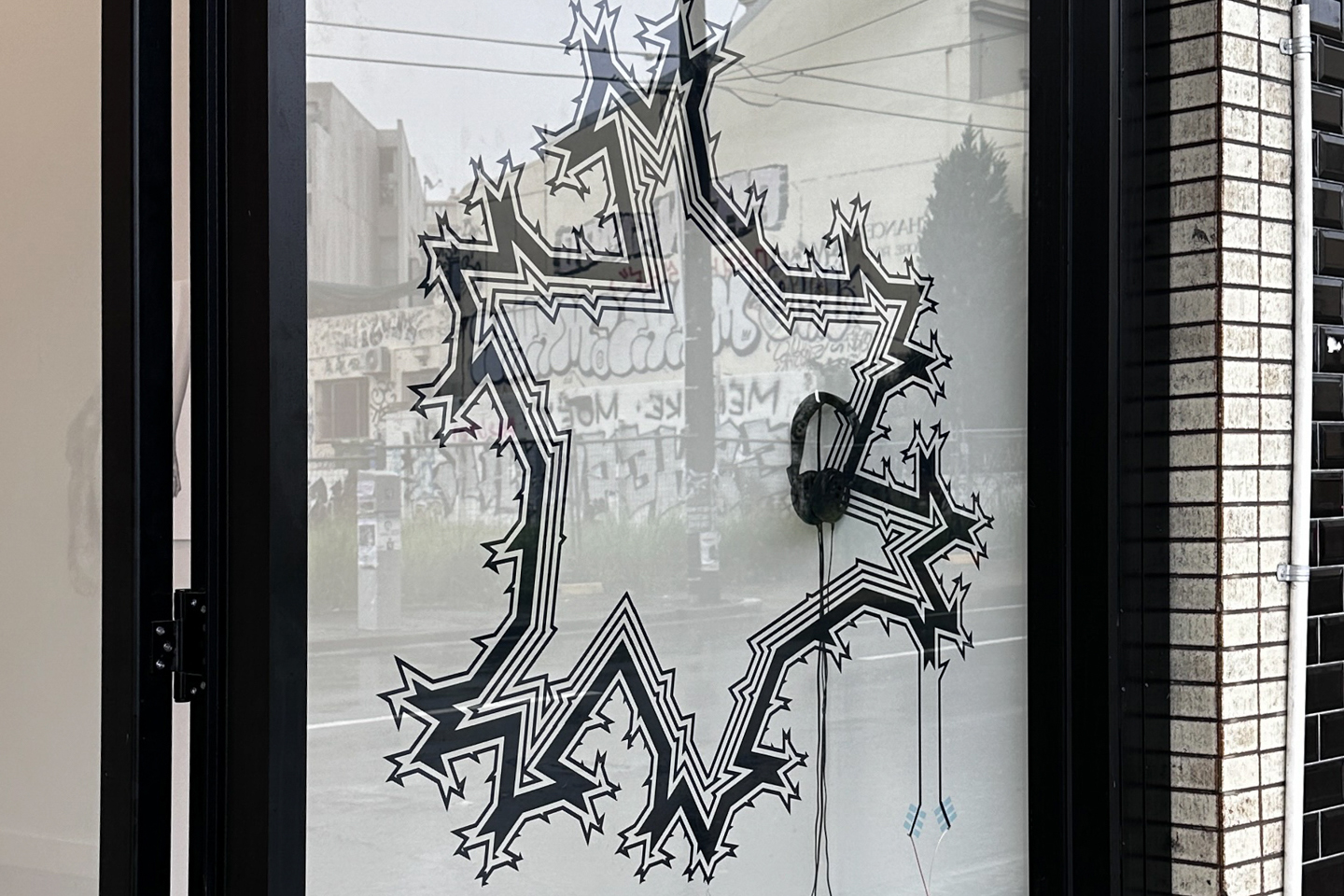
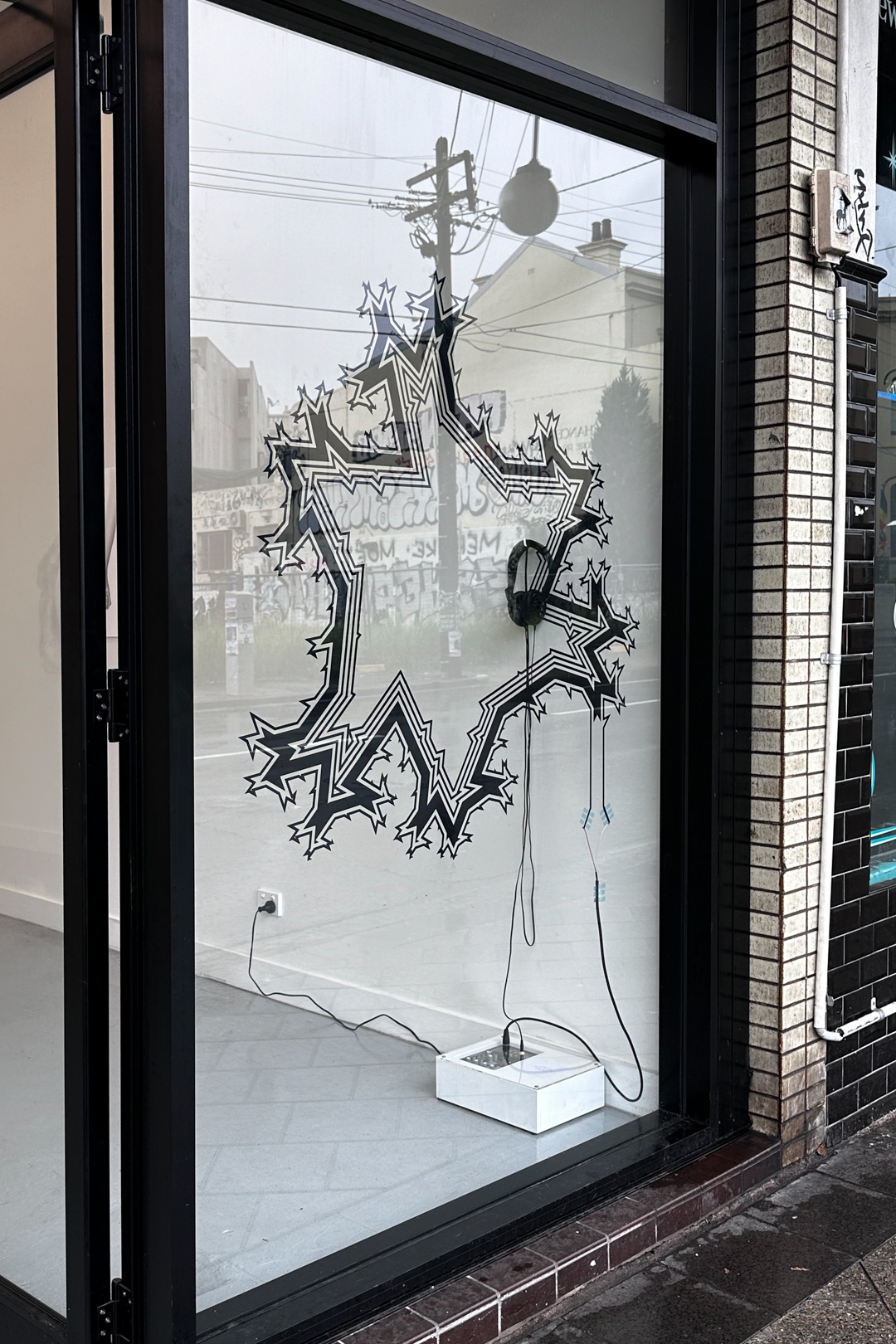
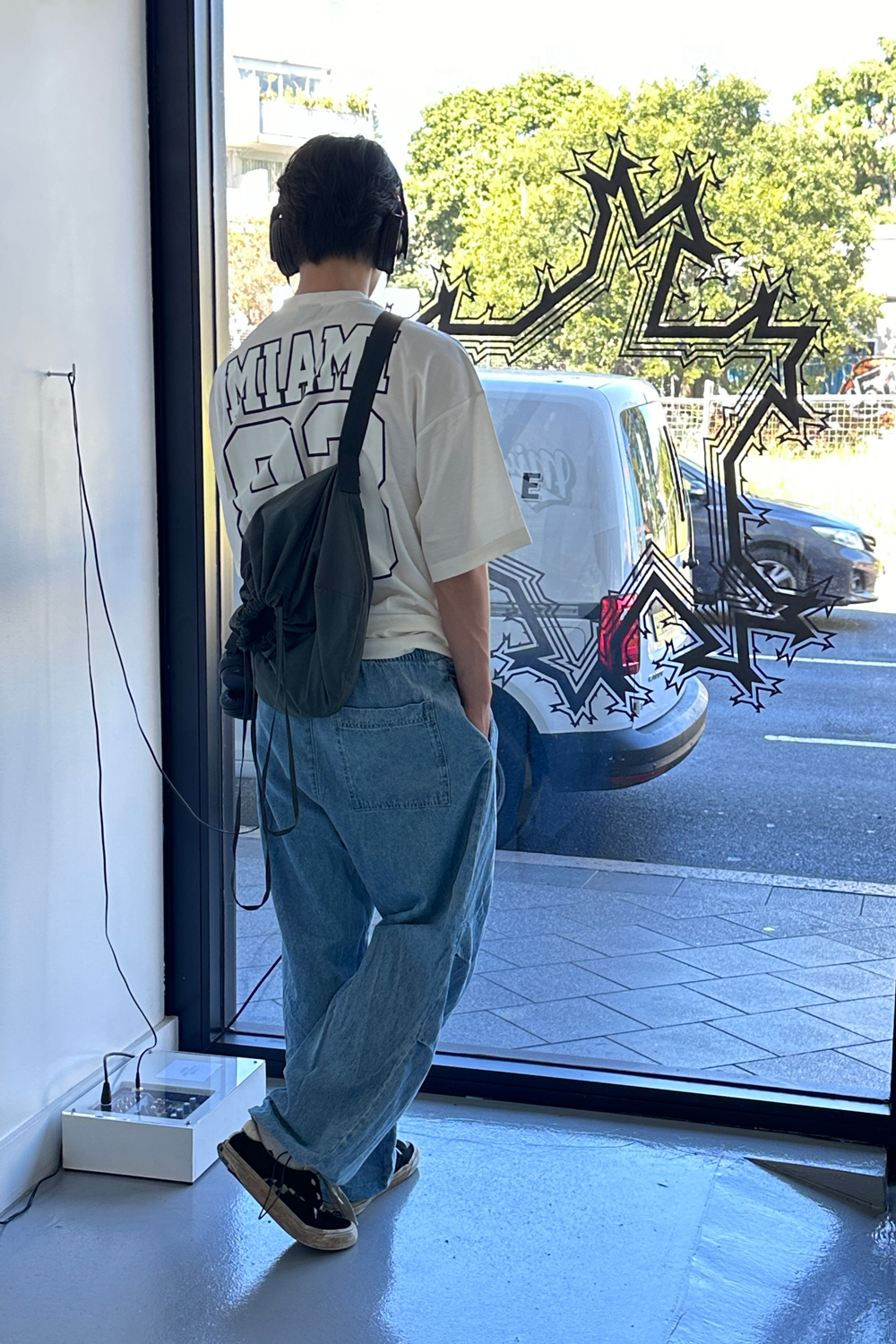
“… street drawing (graffiti) meets 17th-century mathematics to produce a baroque-looking fractal induction antenna.”
In Joyce Hinterding's work, for example, she gives voice to the invisible electromagnetic energies swirling around us. For this exhibition, she has created a large graphite drawing inside the gallery window. Graphite's conductivity means the drawing is a simple loop antenna that exchanges electromagnetic energy with visitors as they touch the glass. Interaction with the work changes the volume of sounds accessible through the headsets provided. Hinterding describes the work as "street drawing (graffiti) meets 17th-century mathematics to produce a baroque-looking and fractal induction antenna. The outer line is a single loop antenna, and the inner lines are passive resonators acting as graphic amplifiers." (1) In this way, Hinterding's work uses an ancient medium to foreground the instantaneity of electromagnetic interaction and the omnipresence of the energy fields around us.
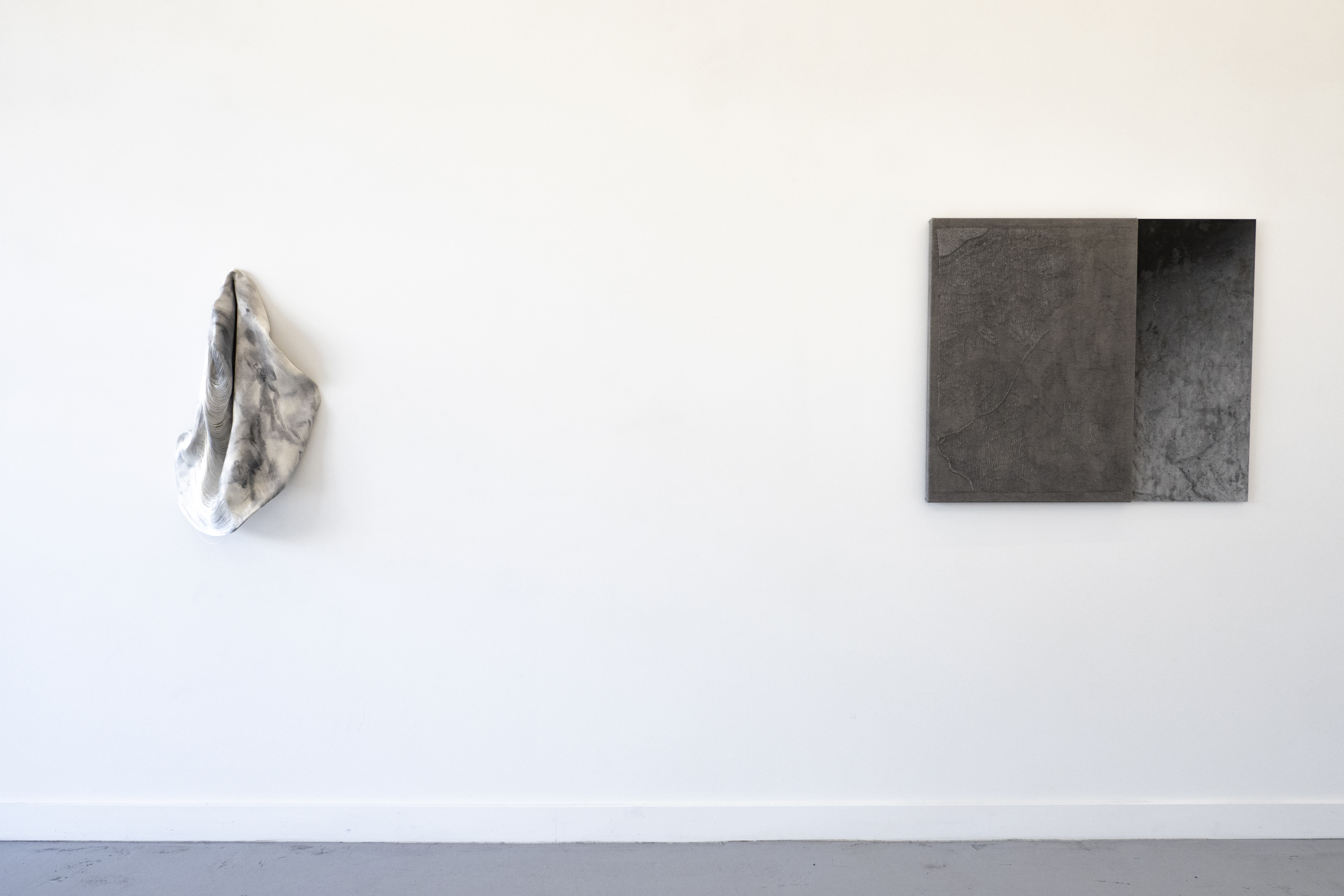
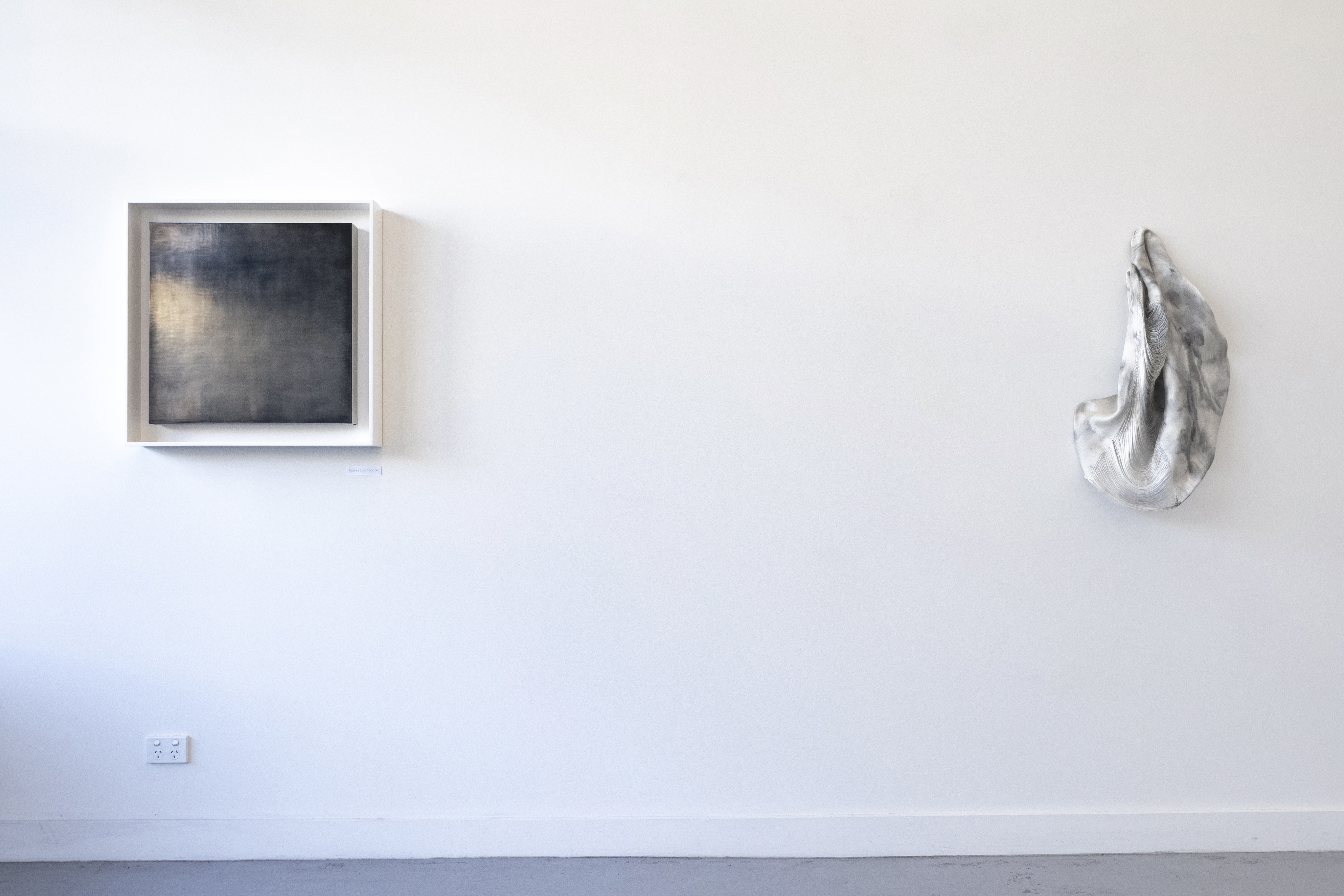
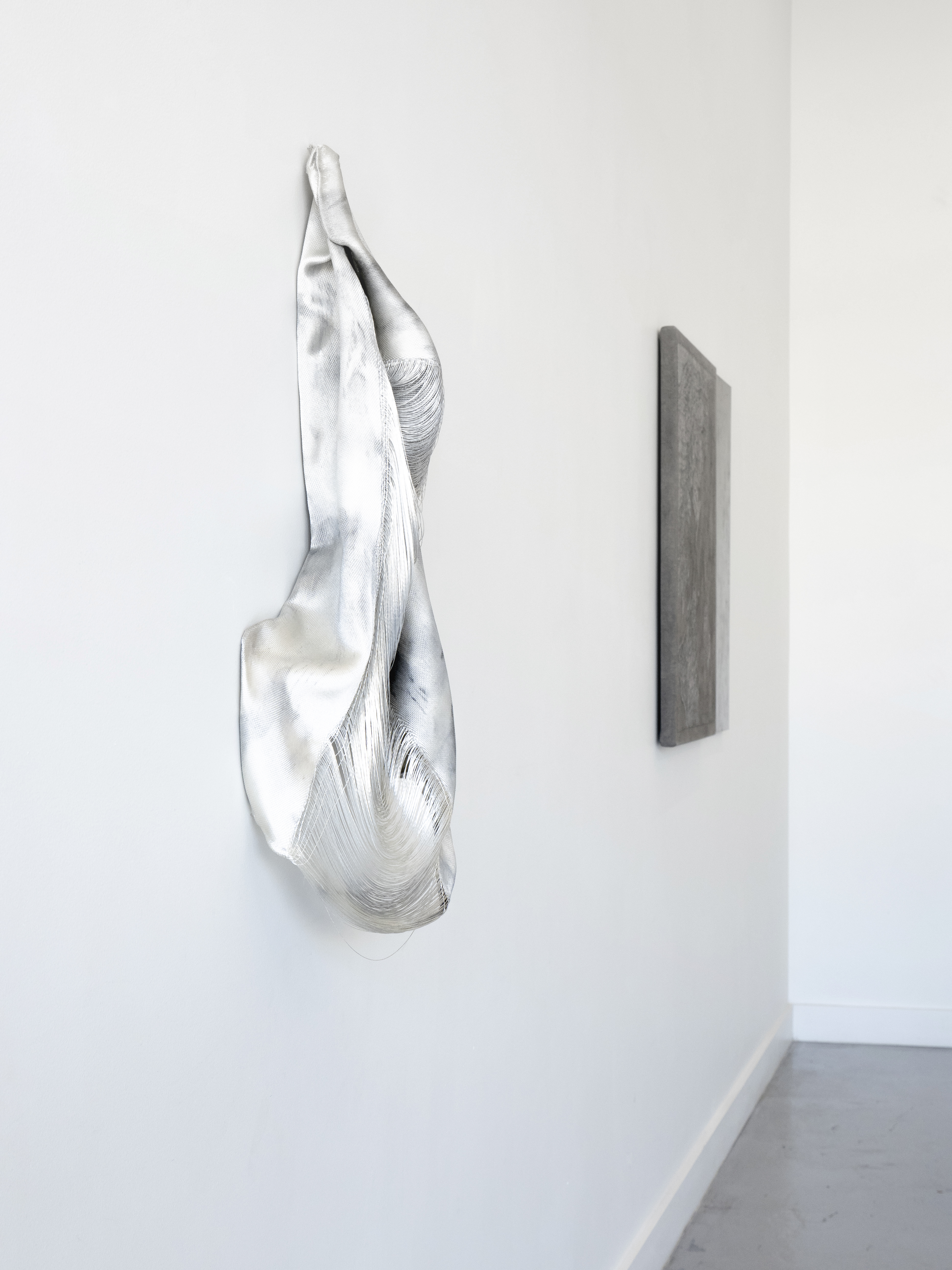
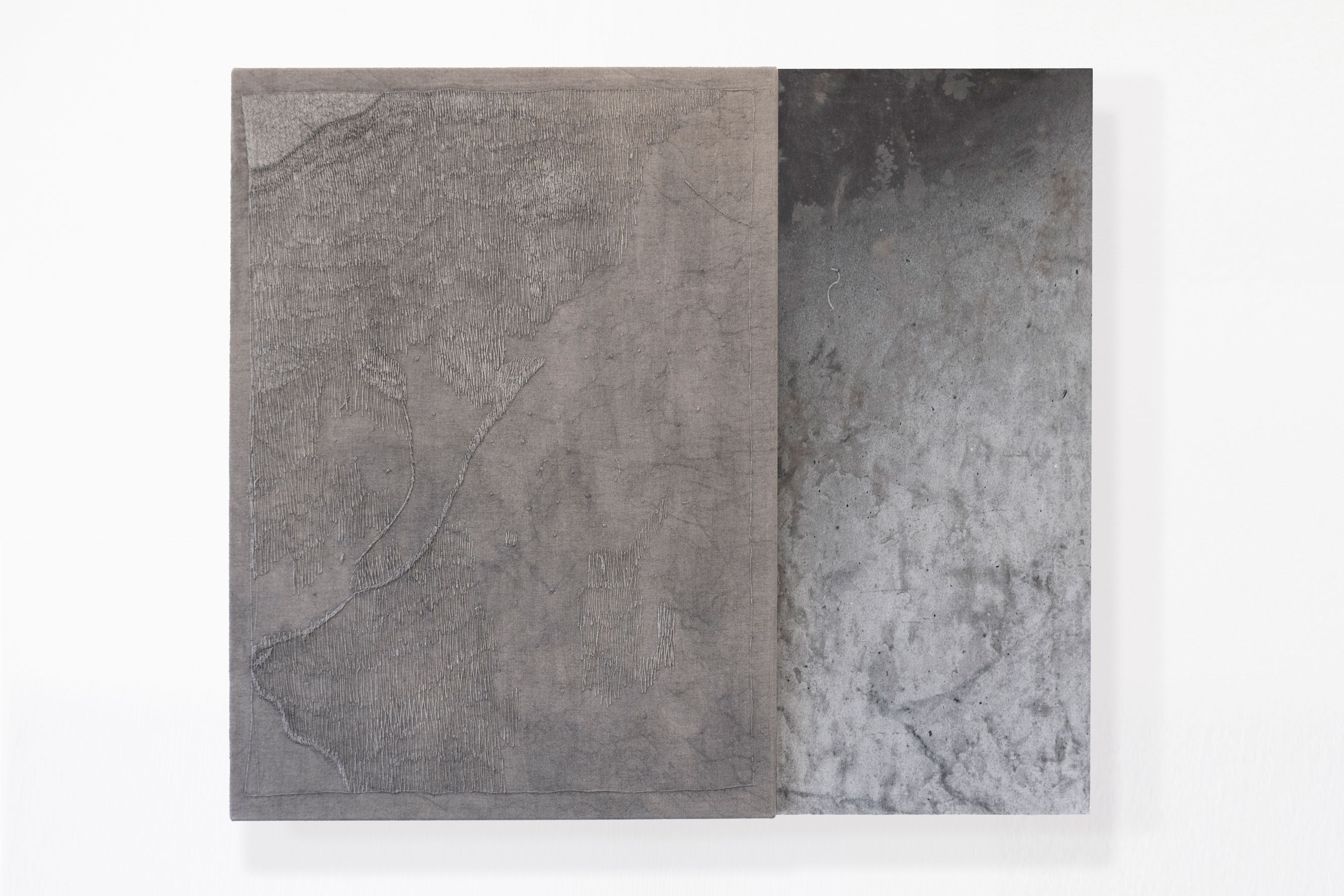
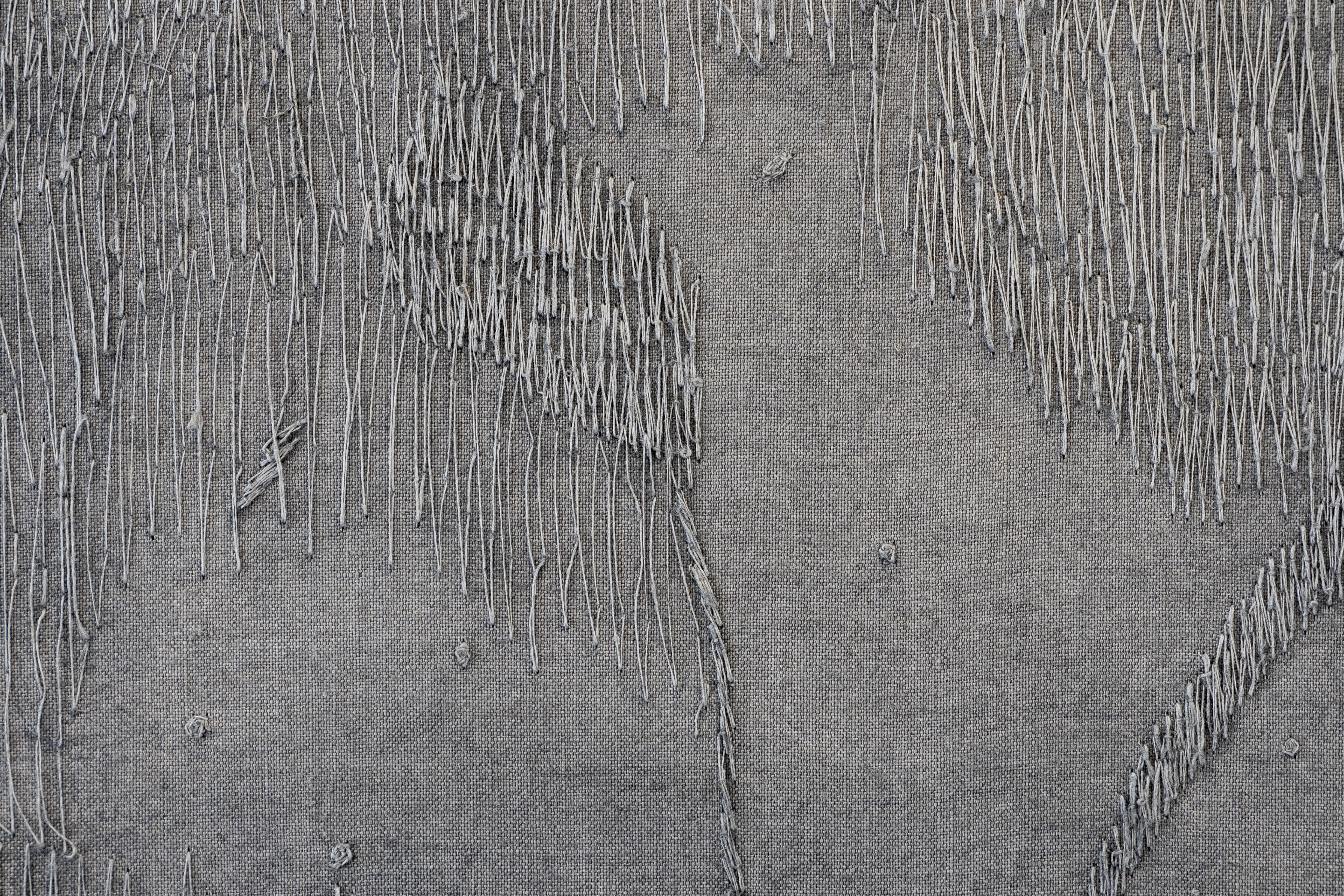
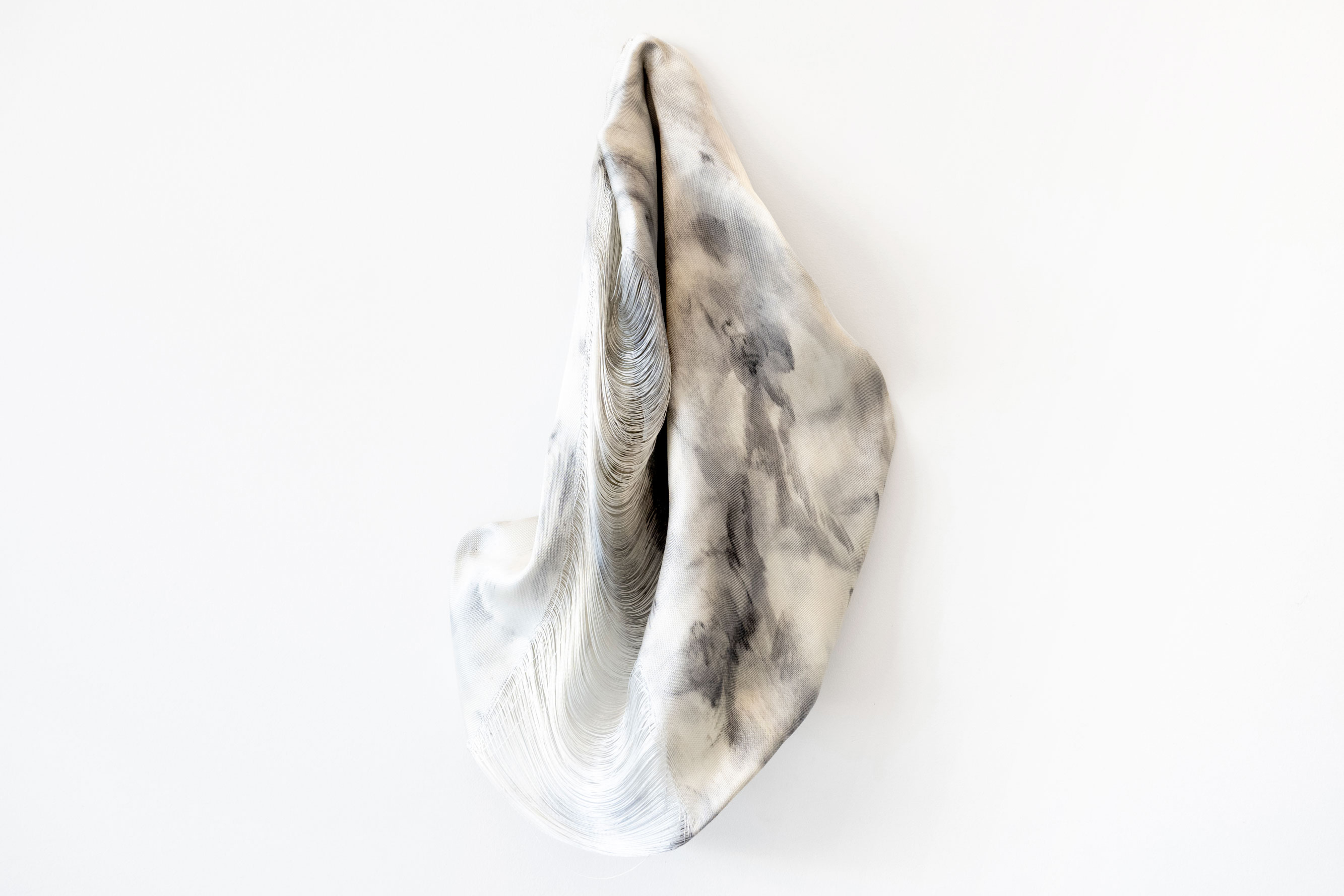
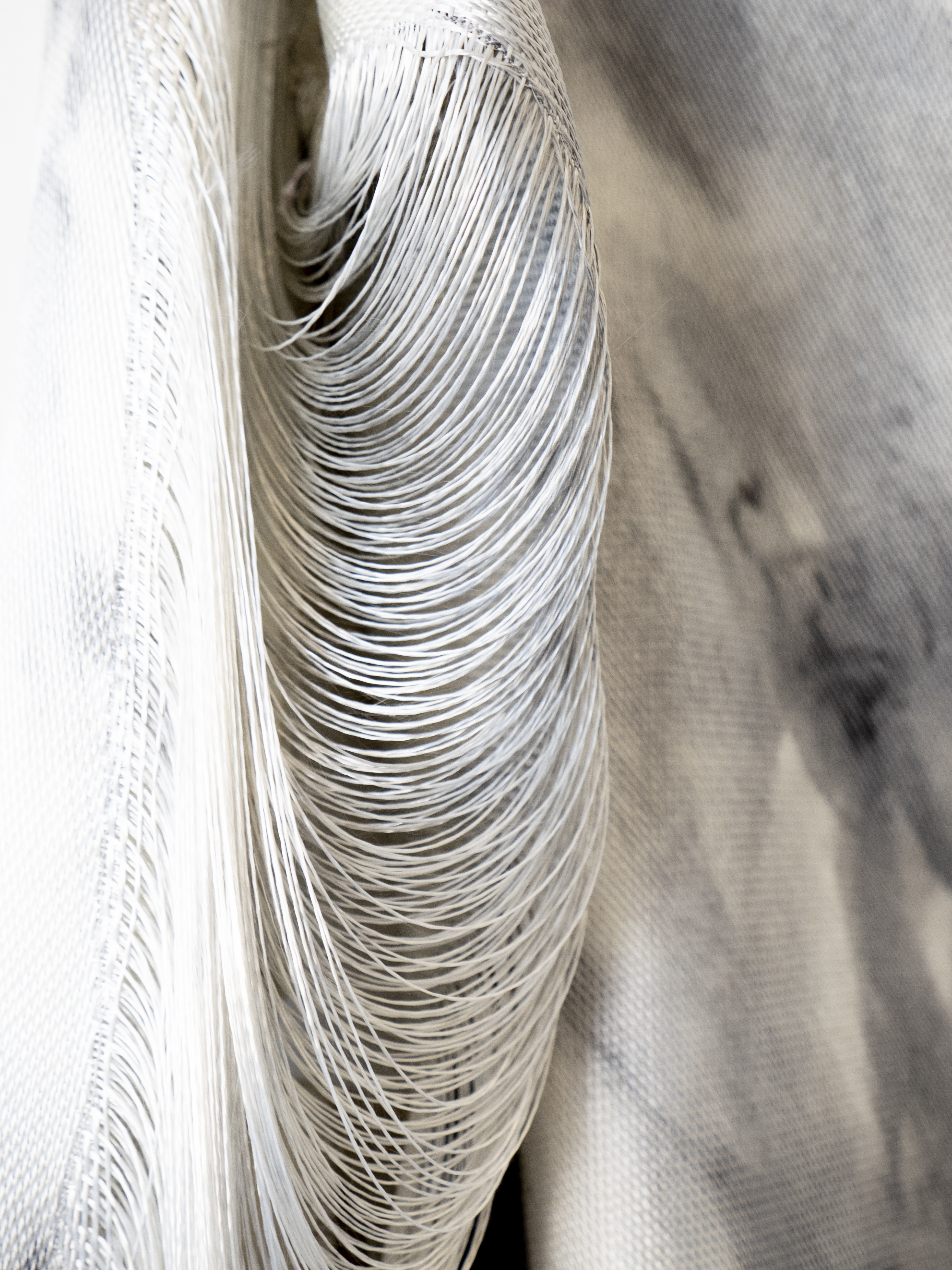
Armando Chant and collaborators Chris Casali and Graziela Guardino combine liquid graphite with fabric to create beautiful, delicate works. Armando's work, 'Diptych II (Vallée de Vénéon)' (2023), is sensitive and atmospheric, a quality he creates through layering graphite washes over embroidered canvas and through layering graphite, beeswax and varnish over photographic prints. His work holds in tension the sensation of knowing and not knowing a landscape, of being immersed in an image while simultaneously aware of its painterly surface. In contrast to Armando's stretched canvas, Chris and Graziela have created a free-form, hanging silk structure in "Evanesce" (2024). They are similarly interested in pulling at the memory of landscape but are more directly concerned with the state of the planet. Where the artists have carefully removed threads, they have destabilised the structure of the work, mirroring the stripping of natural resources from the environment. Armando's, Chris and Grazielas' works celebrate the way liquid graphite flows to create subtle, buildable tones and fluid forms.
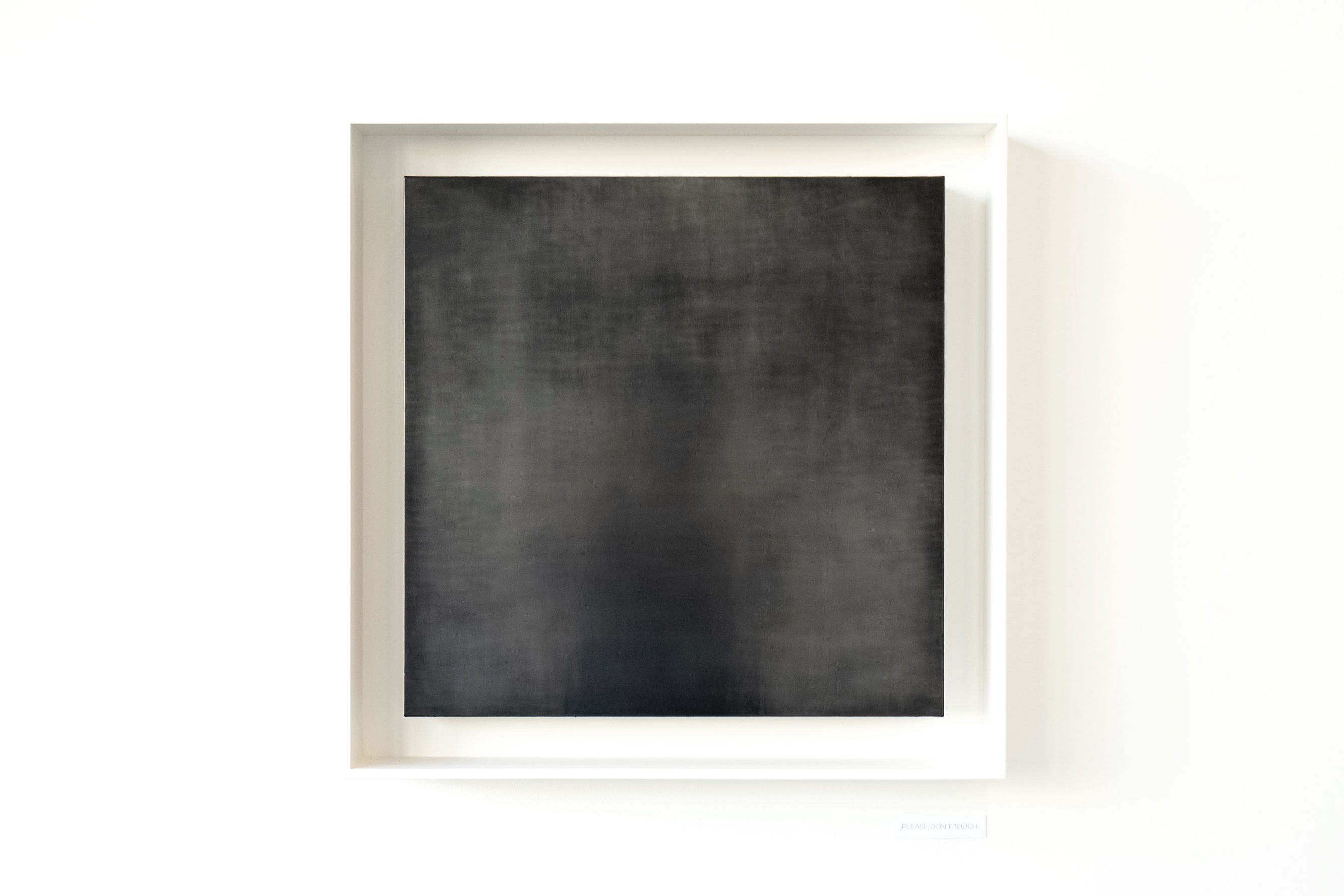
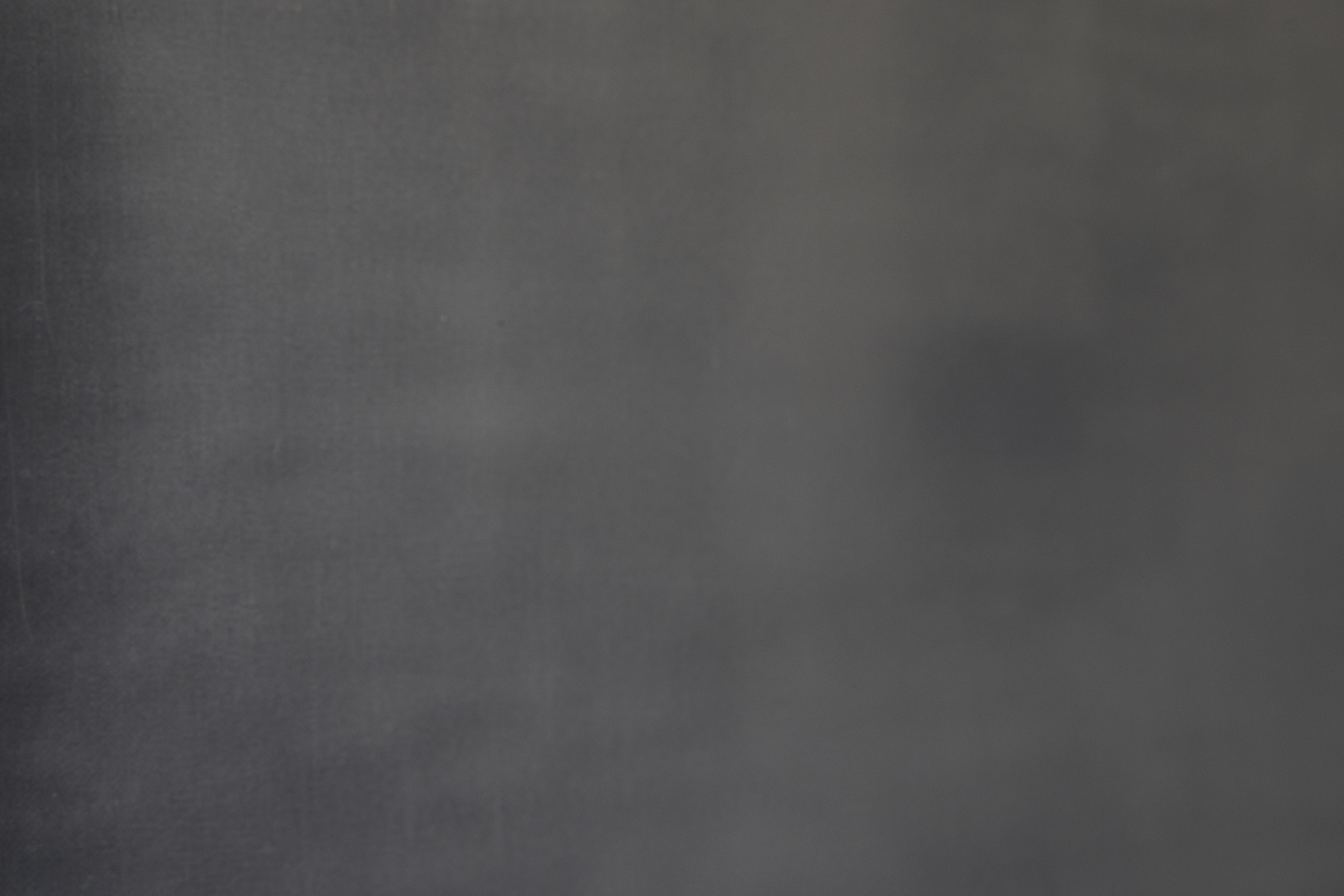
Matthew Allen's work Untitled (2023) is a mirror-like surface that creates blurred, shifting reflections of its surroundings. The process of making these graphite-mirror works is time-consuming and physical, it involves polishing a marble-like substrate followed by layers of graphite. The resultant surface is a luscious, amorphous plane. But it is also unfixed, imparting the sense of something equally precious and precarious. In its perfection, the polished graphite mirror sits like a threshold between here and somewhere dark, moody and unknown.
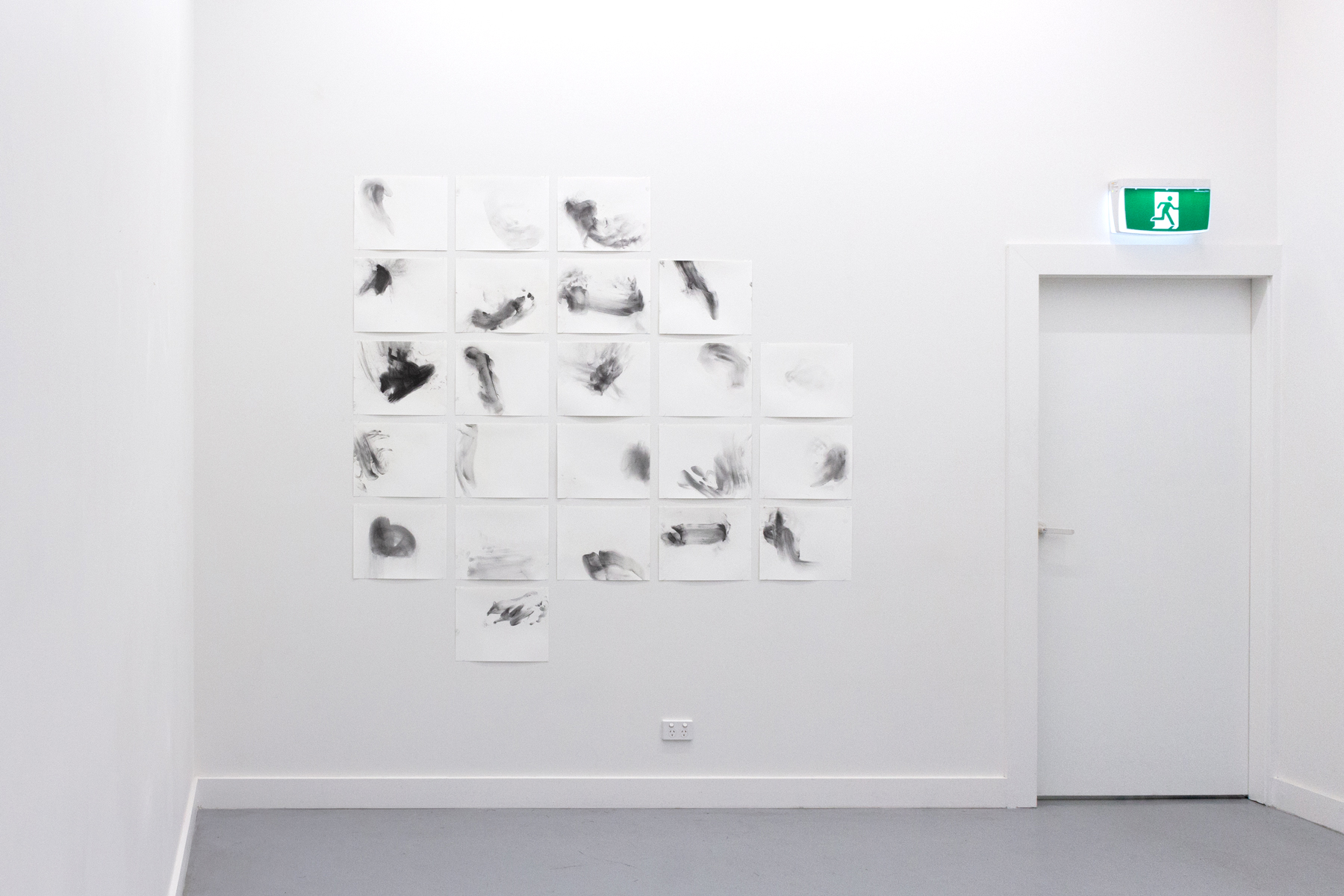
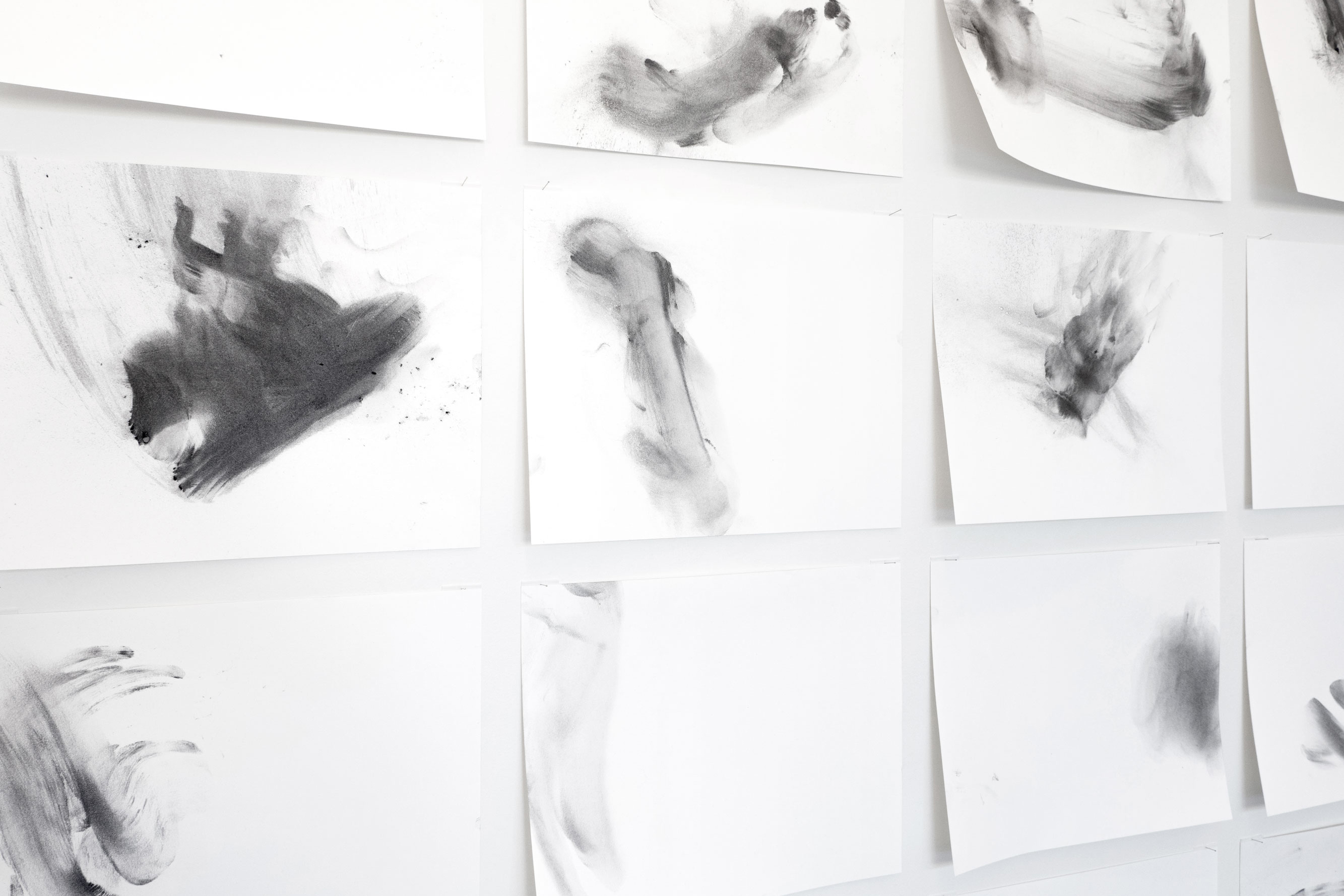
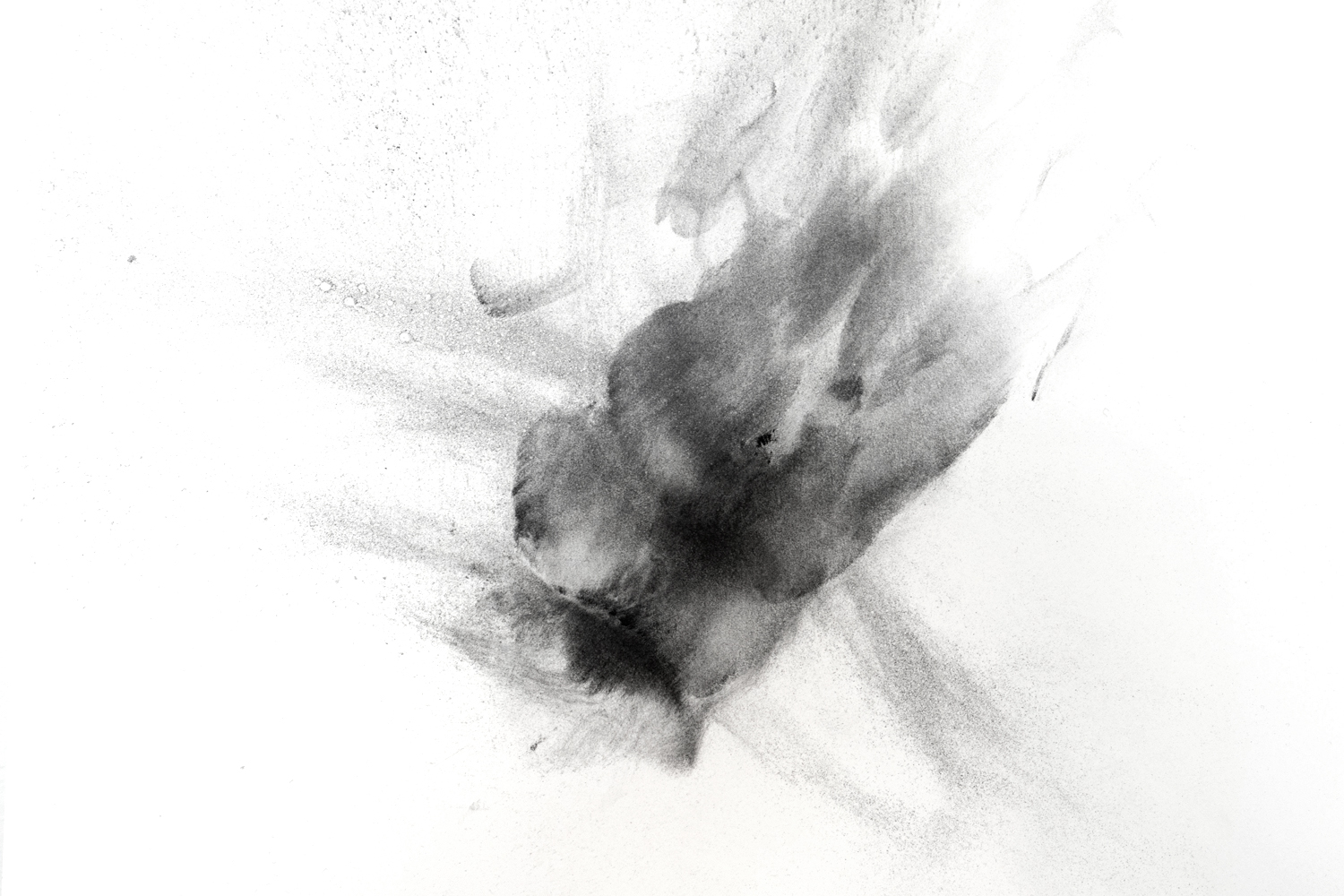
Katelyn Geard uses powdered graphite to create delicate, sensitively drawn figures. These are the only figurative works in the exhibition and bring attention to drawing's most instinctual use - as a tool to reflect what is around us, what we see and who we are. In I have something to say (2024), Katelyn uses powdered graphite and brushes to feel for form. The medium allows layers to build, and brushes make for soft, ethereal marks. Katelyn's drawings look like drawn memories; in the amorphous textures, there is an acknowledgement of time passing; the forms are not solid or certain, not locked to the present, but appear to be passing through.
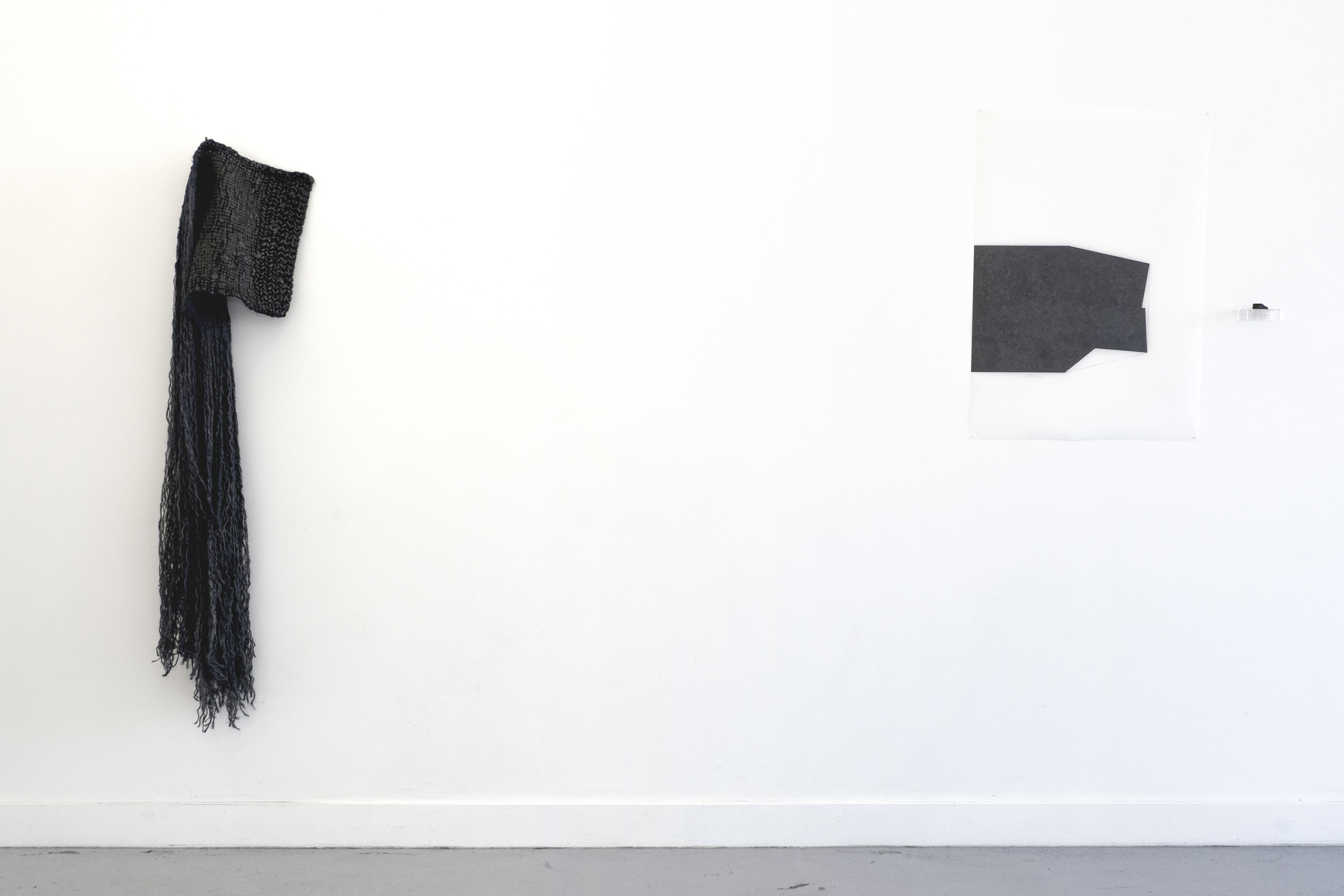
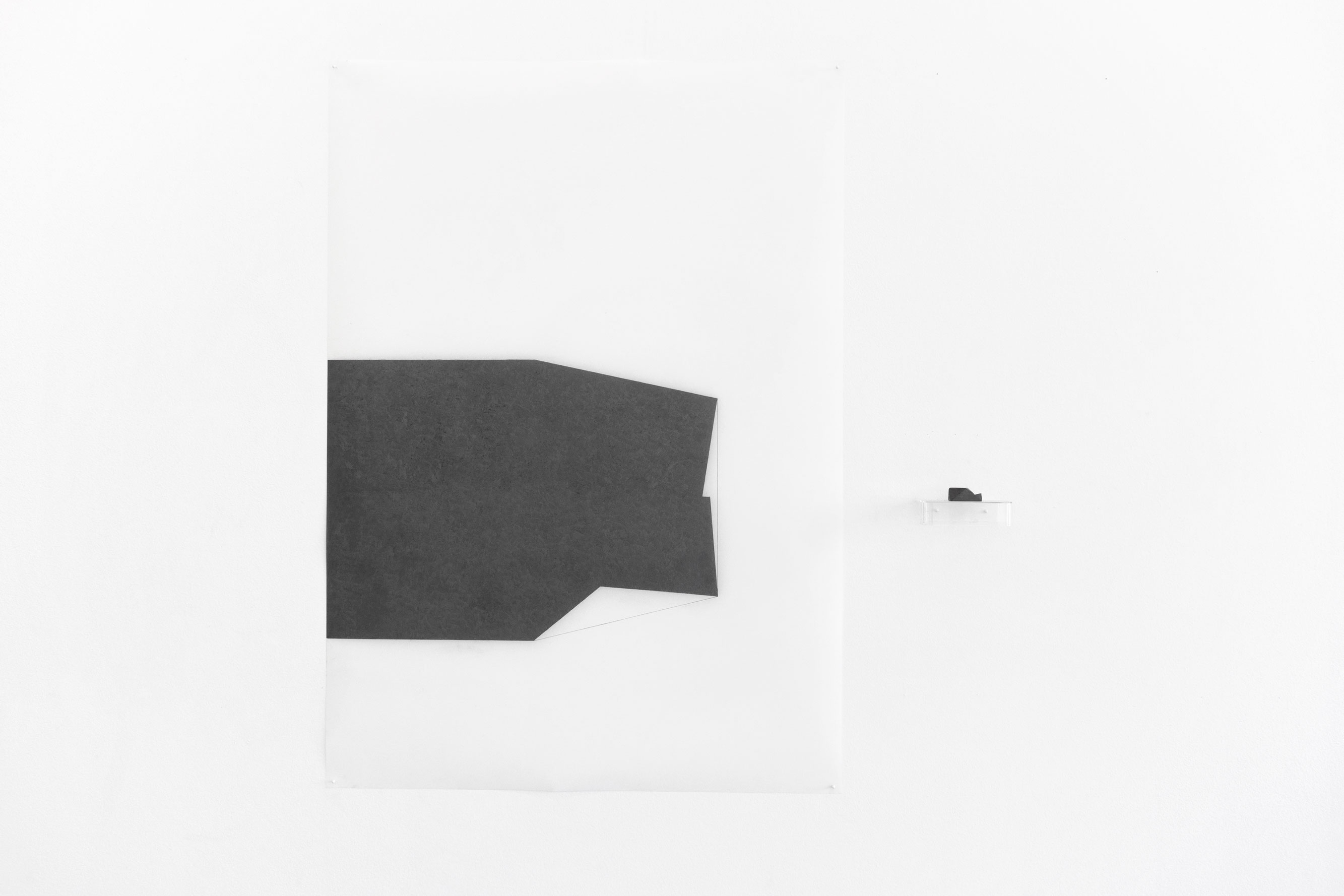
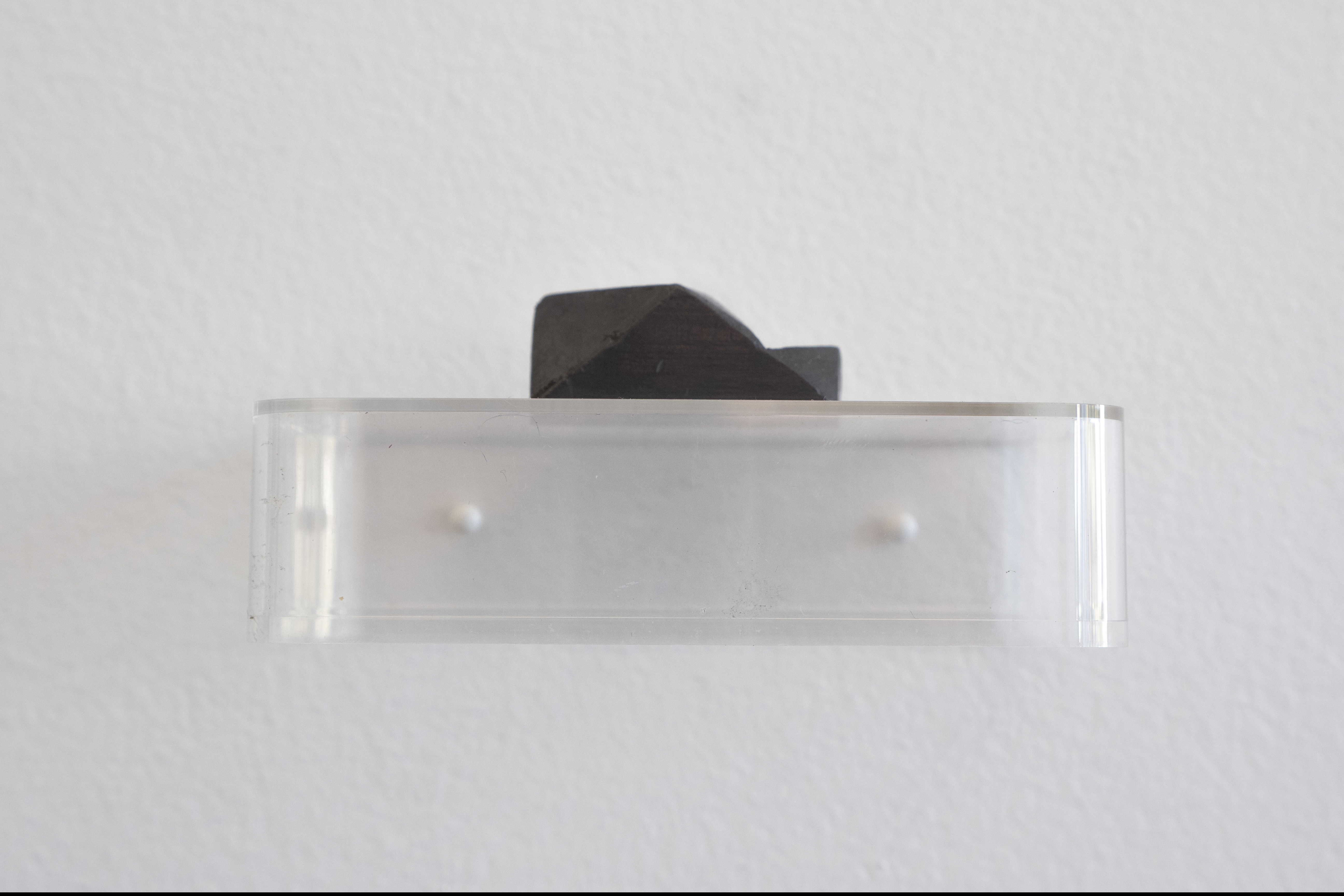
Annelies Jahn also responds to the world around her but through a more measured, conceptual, non-objective approach. In GRAPHITE, Annelies' presents mapping works made with and of, graphite stick. It feels in these drawings like Annelies is 'working things out,' mapping the world systematically, as a way of understanding it, thinking it through, intuiting it. The work has two parts: a drawing on velum, DRAWN INTO FORM (2024), and a small, three-dimensional sculpture, CITé STUDIO FORM (2019). The former foregrounds graphite's ability to reflect light depending on the angle at which it has been applied. The sculpture transposes the drawing into three dimensions, highlighting graphite's soft, carve-able materiality.
“giving a soft object a hardness and metallic look ... a hidden quality, a kind of materialistic puri puri.”
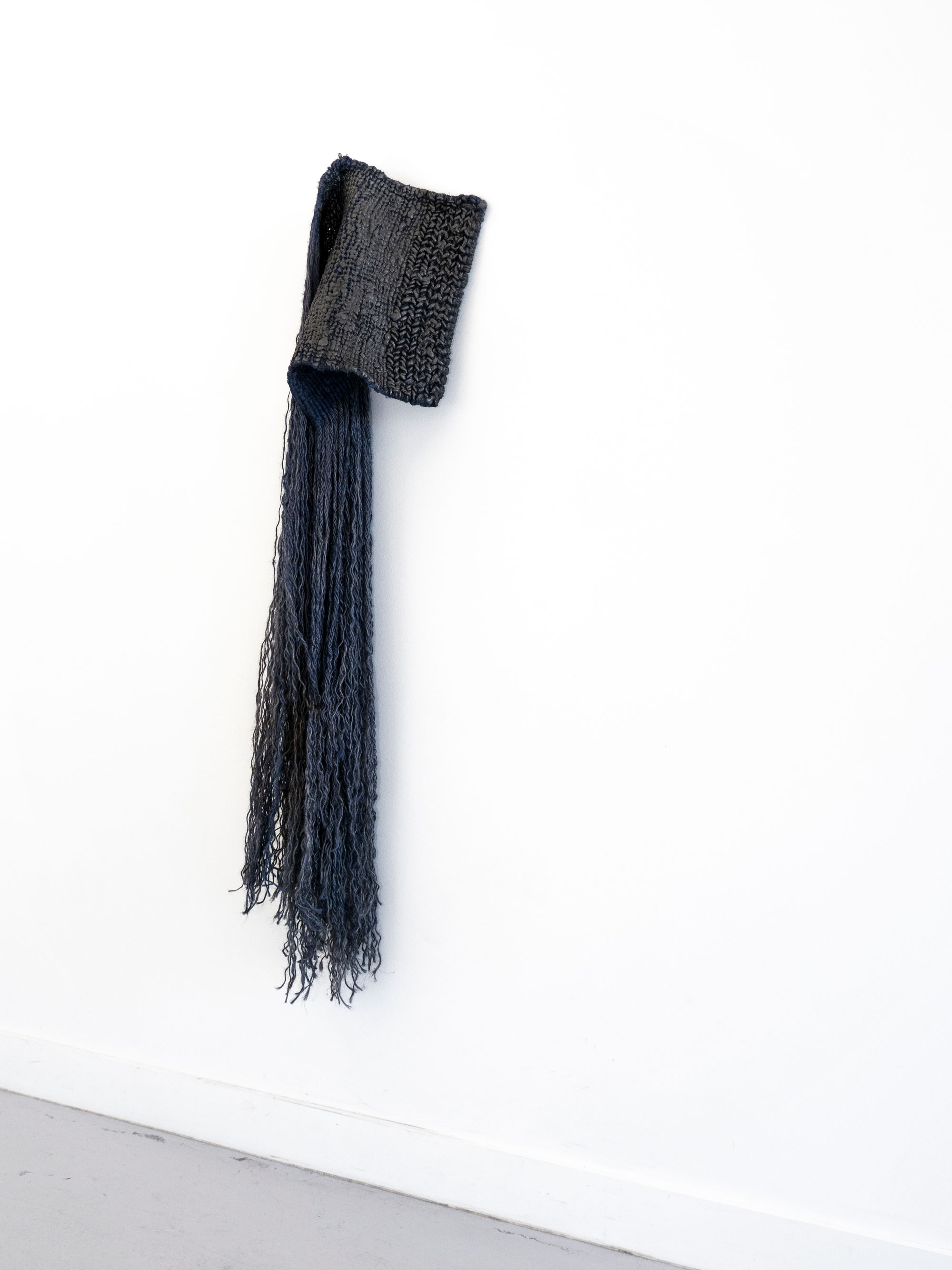
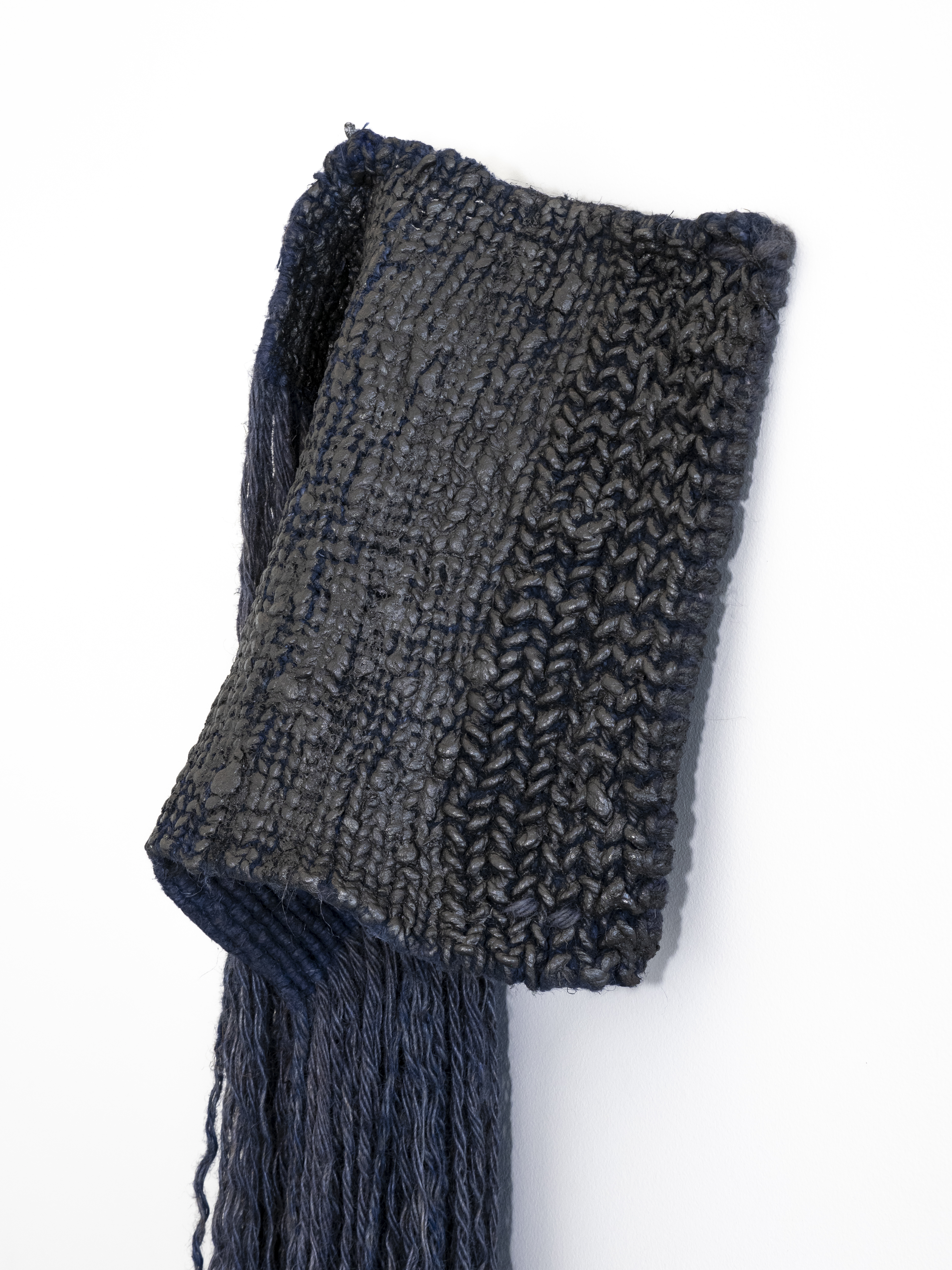
Fiona Currey Billyard spent her early years (0-6) in Papua New Guinea (PNG) but grew up in Australia where she later studied archeology. Her work examines the removal of meaning and power that occurs when objects are taken from their original people, cultures and locations as an outcome of colonisation. In GRAPHITE, Fiona presents a small fibre-based work covered in graphite, a knotted and crocheted object that trails off into long fibre strands. Fiona painted this work with a mixture of graphite, medium and her mother's hair before smoking the object with her father's tobacco. These personal ephemera are items of substance and memory for the artist, which hold a kind of puri puri (magic) and add a sense of beauty and abject discomfort. For Fiona, using graphite is a means of "giving a soft object a hardness and metallic look ... giving the object a hidden quality, a kind of materialistic puri puri." (2)
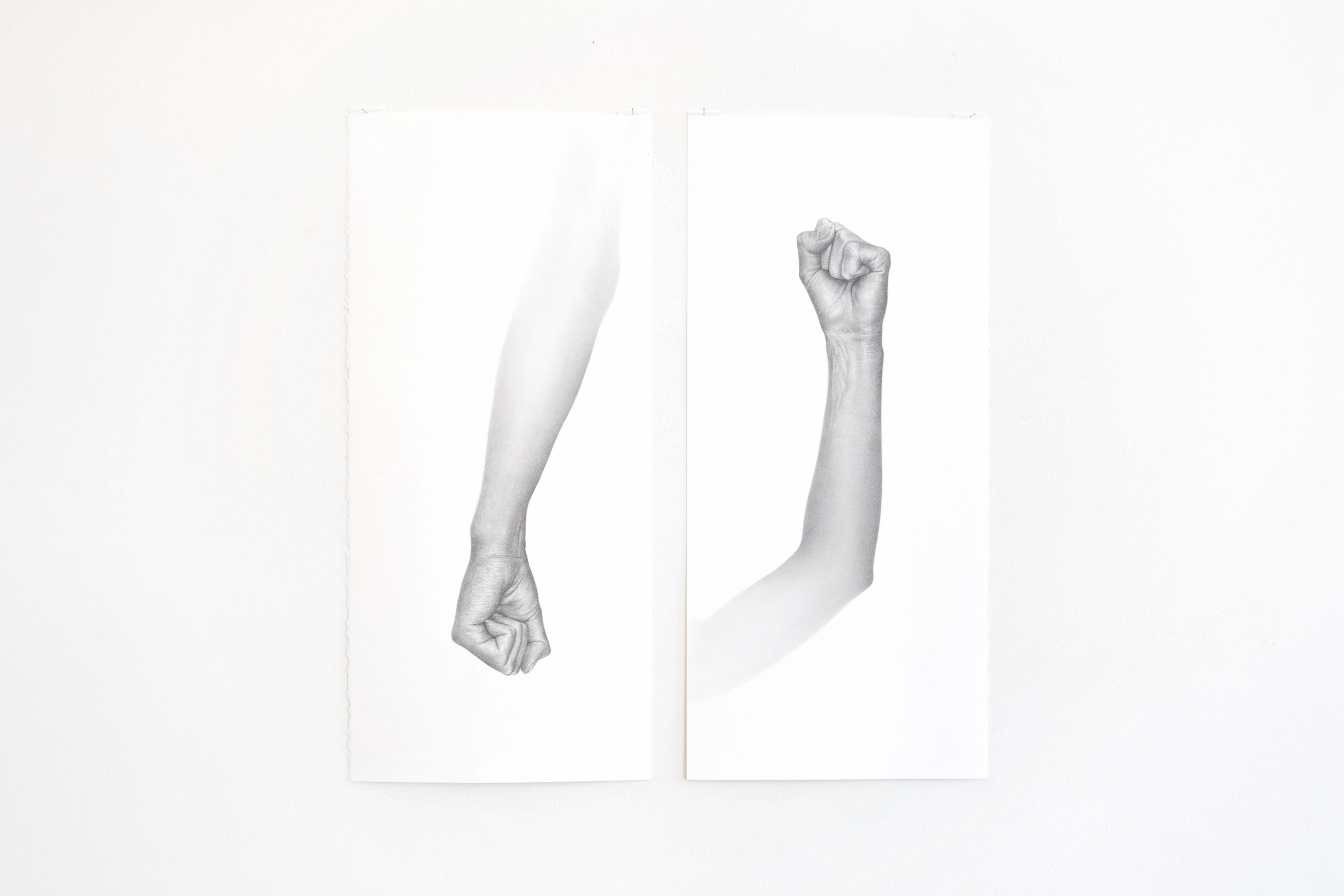
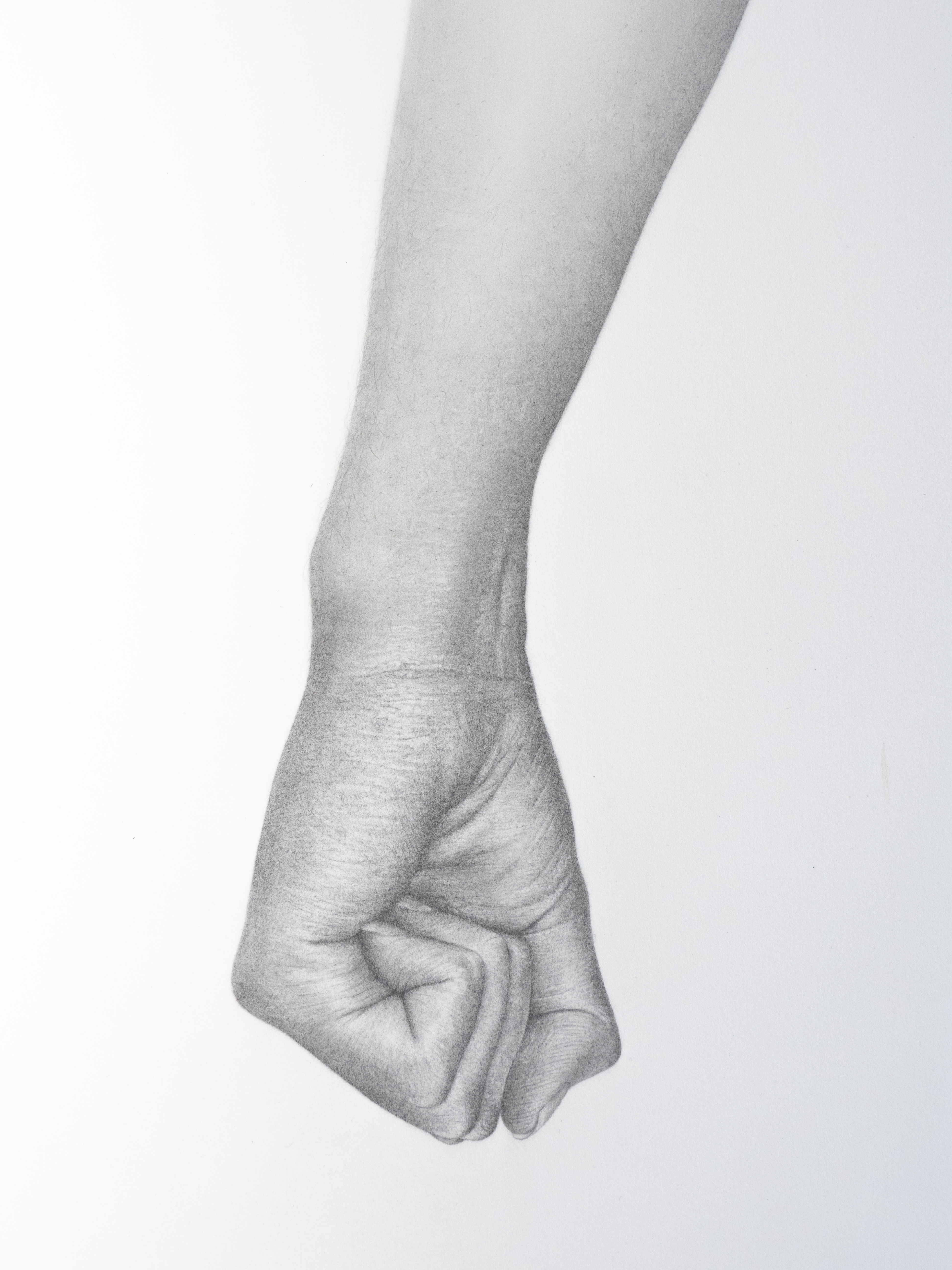
Belinda Yee works with time as a medium. She is attracted to the temporal paradox inherent to graphite – that it takes millennia to metamorphose in nature but can be used and erased in a second. In this exhibition, Belinda reflects on graphite's transient nature by presenting several one-second drawings. In her practice, Belinda is interested in decolonising time, which she attempts to do by foregrounding temporalities other than the quantified, measured and structured metre of industrialised time - preferring to foreground time as lived units of experience or change.
Through the work of nine contemporary Australian artists, the exhibition GRAPHITE seeks to explore the breadth of the medium's material potential. It demonstrates the many ways graphite is used in contemporary Australian drawing, revealing a diverse wealth of engagement with this sometimes tricky, many-faceted material.
(1) Email conversation between Belinda Yee and Joyce Hinterding, March, 2024.
(2) In-person conversation between Belinda Yee and Fiona Currey Billyard, March, 2024.
For more information see — DRAW Space